
Chicago Plastic Surgeons on Gynecomastia vs. Pseudogynecomastia
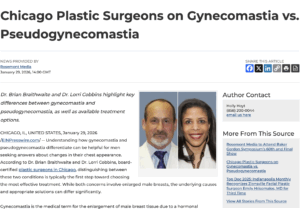 Dr. Brian Braithwaite and Dr. Lorri Cobbins highlight key differences between gynecomastia and pseudogynecomastia, as well as available treatment options.
Chicago, IL – Understanding how gynecomastia and pseudogynecomastia differentiate can be helpful for men seeking answers about changes in their chest appearance. According to Dr. Brian Braithwaite and Dr. Lorri Cobbins, board-certified plastic surgeons in Chicago, distinguishing between these two conditions is typically the first step toward choosing the most effective treatment. While both concerns involve enlarged male breasts, the underlying causes and appropriate solutions can differ significantly.
Gynecomastia is the medical term for the enlargement of male breast tissue due to a hormonal imbalance. This imbalance often involves an increase in estrogen activity, a decrease in testosterone, or enhanced sensitivity of breast tissue to these hormones. Dr. Braithwaite explains that gynecomastia can occur at any age and may be triggered by puberty, aging, certain medications, underlying health conditions, or the use of anabolic steroids. Although the condition is medically benign, it can be emotionally distressing and may contribute to self-consciousness in social or athletic settings.
In contrast, pseudogynecomastia is not related to glandular breast tissue growth. Instead, it results from excess fatty tissue in the chest area, commonly associated with weight gain or obesity. Dr. Cobbins notes that while the physical appearance of pseudogynecomastia may mimic true gynecomastia, treatment approaches differ because fat, rather than glandular tissue, is the primary contributor. For this reason, lifestyle modifications such as weight loss and exercise may improve chest contour for some individuals with pseudogynecomastia, though long-standing fat deposits can still persist despite targeted fitness efforts.
One of the key challenges patients face is recognizing which of the two conditions they have. Since both gynecomastia and pseudogynecomastia produce similar aesthetic concerns, professional evaluation is essential. During a consultation, surgeons typically begin with a physical examination to determine whether enlargement is due to glandular tissue, excess fat, or a combination of both. Imaging studies may be recommended in certain cases to clarify the diagnosis or investigate underlying causes. This diagnostic process helps ensure that each patient receives a treatment plan tailored to the nature of their condition.
Treatment options vary based on the underlying cause. For men diagnosed with true gynecomastia, surgical intervention is often the most effective solution. Male breast reduction surgery can involve excision of glandular tissue, liposuction, or a combination of both techniques. This procedure is designed to create a firmer, more masculine chest contour. Dr. Cobbins emphasizes that while gynecomastia is common and treatable, the decision to undergo surgery should be made after fully understanding the potential benefits and risks, as well as discussing realistic expectations with a qualified plastic surgeon.
For pseudogynecomastia, liposuction alone may be sufficient if excess fat is the primary concern. Modern liposuction techniques allow for targeted removal of stubborn fat deposits, resulting in improved definition of the chest area. However, if significant skin laxity is present, additional procedures may be considered to tighten and refine the overall contour. According to Dr. Braithwaite, it is not unusual for patients to present with a combination of both glandular tissue and fat, which requires a customized surgical approach to achieve optimal results.
Beyond aesthetic improvements, addressing gynecomastia can also have meaningful psychological benefits. Men often report feeling more confident, comfortable in fitted clothing, and willing to participate in activities such as swimming or working out without feeling self-conscious. Still, Dr. Cobbins reminds patients that emotional well-being is only one part of the equation. She encourages individuals experiencing breast enlargement to seek evaluation rather than relying on assumptions or self-diagnosis, as doing so ensures they receive accurate information and appropriate guidance.
The surgeons also highlight the importance of awareness, noting that many men delay seeking care due to embarrassment or the misconception that gynecomastia is rare. In reality, gynecomastia affects a significant portion of adolescent boys and adult men at some point in their lives. While the condition may resolve on its own in younger patients, persistent enlargement or enlargement that develops later in adulthood typically warrants professional evaluation. For adults, especially those experiencing rapid changes, a medical assessment may help identify underlying health concerns or medication-related factors contributing to the condition.
Ultimately, distinguishing between gynecomastia and pseudogynecomastia can empower men to make informed decisions about their health and appearance. With expert evaluation and targeted treatment, both conditions can be effectively managed. Dr. Braithwaite and Dr. Cobbins encourage individuals who have concerns about chest enlargement to consult with a qualified plastic surgeon who can provide clarity and help determine the most appropriate course of action.
About Brian Braithwaite, M.D., F.A.C.S.
Dr. Brian Braithwaite is a board-certified plastic surgeon and Chicago native who brings extensive training and military medical experience to his practice. He earned his undergraduate degree from the University of Chicago and his medical degree from the University of Illinois College of Medicine before serving as a flight surgeon in the United States Navy. After completing his military service, he pursued a General Surgery residency at Keesler Air Force Base Medical Center and advanced Plastic Surgery training at the University of Louisville. Dr. Braithwaite later served as Chief of Plastic Surgery at Bethesda Naval Medical Center, now Walter Reed National Military Medical Center, and also taught future surgeons as an Assistant Professor at the Uniformed Services University of the Health Sciences. He is certified by the American Board of Plastic Surgery and is a Fellow of the American College of Surgeons. In addition, he maintains active membership in the American Society of Plastic Surgeons and The Aesthetic Society®.
About Lorri Cobbins, M.D., F.A.C.S.
Dr. Lorri Cobbins is a board-certified plastic surgeon with a robust academic and surgical background, beginning with her medical degree from Saint Louis University, where she also earned a Distinction in Research. She completed a five-year residency in Otolaryngology (Head and Neck Surgery) at the University of Louisville Medical Center, followed by formal training in Plastic and Reconstructive Surgery. Dr. Cobbins has served as President of the Illinois Society of Plastic Surgeons and has been recognized for excellence in undergraduate instruction at the University of Louisville School of Medicine. She is certified by the American Board of Plastic Surgery, is a Fellow of the American College of Surgeons, and maintains active membership in the American Society of Plastic Surgeons and The Aesthetic Society®.
Dr. Braithwaite and Dr. Cobbins are both available for interview upon request.
For more information, visit aestheticinstitutechicago.com and facebook.com/plasticsurgeonschicago/.
Contact:
The Aesthetic Institute of Chicago
601 West Randolph Street
Chicago, IL 60661
(312) 258-9100
Rosemont Media
(858) 200-0044
www.rosemontmedia.com